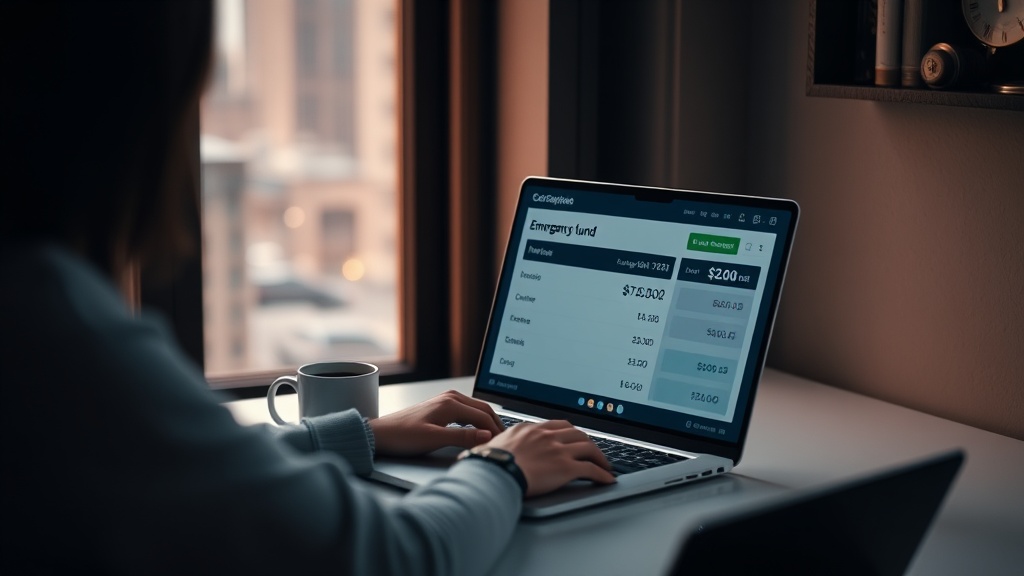
How to Build an Emergency Fund When You Freelance: A No‑BS Blueprint
Hook:
Ever had a client disappear right before payday, leaving you scrambling for rent? I’ve been there – twice – and the only thing that saved me was a cash cushion I’d built when the money was actually coming in.
Context:
Freelancers don’t have the safety net of a steady paycheck, so a well‑stocked emergency fund isn’t a luxury; it’s a business necessity. In this guide I’ll walk you through the exact numbers, the best accounts, and the tiny habits that make the whole thing painless.
Why an Emergency Fund Matters for Freelancers
What’s the risk?
- Late payments or outright non‑payment (think of the 72‑Hour Invoice Recovery Protocol you’ve read about).
- Seasonal dry spells – you might have a full pipeline in Q1 and barely any leads in Q3.
- Unexpected expenses – health bills, equipment failure, or a sudden need to relocate.
What’s the payoff?
- You stop trading sleep for “just‑in‑time” invoicing.
- You gain negotiation power; you can walk away from bad clients without fearing immediate cash flow collapse.
- You protect your credit score and avoid high‑interest credit cards.
How Much Should You Save?
What’s the baseline?
Most financial planners recommend 3–6 months of living expenses. For freelancers, I push the lower bound to 4 months because income is irregular.
Step 1: Calculate your average monthly essential costs (rent, utilities, food, health insurance, minimum debt payments).
Example: My monthly essentials total $3,200. 4 months × $3,200 = $12,800.
Adjust for Your Situation
- High‑risk niche (e.g., short‑term gigs): aim for 6 months.
- Stable retainer clients: 3 months might suffice.
- Side income (e.g., teaching, passive royalties): subtract that from the total.
Where to Keep the Money?
Should I use a regular savings account?
A traditional high‑yield savings account works, but you’ll earn 0.5%–1.2% APY – hardly enough to beat inflation.
What about a money‑market fund?
Money‑market mutual funds (e.g., Vanguard Prime Money Market) offer 1.5%–2.0% and are FDIC‑insured up to $250k if you use a brokerage‑linked account.
My preferred setup (the “Freelance Fund Stack”)
- Primary stash – an online high‑yield savings account (e.g., Ally, Marcus) for the first 75% of your target.
- Secondary buffer – a money‑market fund for the remaining 25% to earn a bit more interest while staying liquid.
- Automatic transfers – set a recurring transfer on payday (or the day you invoice) to move a fixed % of each payment into the fund.
Pro tip: Use a separate “Emergency Fund” label in your budgeting tool (I use YNAB) so you never mistakenly spend it.
How to Build It Without Feeling the Pinch
1️⃣ Start Small, Stay Consistent
- Rule of 20%: When a client pays, immediately allocate 20% to the fund. If a project is $5,000, $1,000 flies into the emergency account before you even think about spending.
2️⃣ Round‑Up Your Income
- Every invoice you receive, round up to the nearest $100 and funnel the difference. $4,720 becomes $5,000 – that extra $280 goes straight to the fund.
3️⃣ Capture Windfalls
- Tax refunds, bonuses, or a client’s “thanks” gift? Treat them as 100% fund contributions.
4️⃣ Trim Non‑Essentials Early
- Cancel that $15/month design asset you never use. Redirect it to the fund. Small savings add up fast.
5️⃣ Re‑evaluate Quarterly
- Use the Mid‑Year Repricing framework (see my post on pricing) to adjust rates. If you raise rates, bump the fund contribution proportionally.
What to Do When the Fund Is Full
- Re‑stock – If you hit your target, keep the habit: allocate the same % to a growth fund (e.g., a low‑cost index fund) for long‑term wealth.
- Invest in Insurance – A solid emergency fund can free up cash for a Freelance Insurance policy (see my insurance guide).
- Upgrade Your Tools – Better hardware or software can boost productivity, ultimately increasing earnings.
Common Mistakes & How to Avoid Them
- Treating the fund as a “nice‑to‑have” – Automate transfers; don’t rely on willpower.
- Keeping it in a checking account – Earn zero interest and tempt yourself to spend.
- Setting the goal too low – Recalculate when your expenses change (e.g., moving to a bigger city).
- Neglecting tax obligations – Remember the 2026 Freelance Tax Changes; your fund should cover tax payments too.
Takeaway: Your Emergency Fund Blueprint
- Calculate your essential monthly cost.
- Set a target of 4–6 months.
- Choose a two‑tier storage (high‑yield savings + money‑market).
- Automate 20% of every payment into the fund.
- Quarterly review and adjust contributions.
Do this, and you’ll never have to scramble for cash when a client ghosts you.
Related Reading
- The 72‑Hour Invoice Recovery Protocol: How to Get Paid Without Begging – A quick cash‑flow rescue when payments are late.
- Solo 401(k) vs. SEP‑IRA: The Math Most Freelancers Get Wrong – How to grow the money you’re protecting.
- Your Personal Brand Is Your Receipts: What Actually Works in 2026 – Build the reputation that brings steady clients.
- The Scope Creep Kill Switch: A 4‑Step System That Recovered $8,000 in My First Year – Keep your projects profitable.
FAQs
{
  "meta": {
    "faqs": [
      {"question": "How much should a freelancer save in an emergency fund?", "answer": "Aim for 4–6 months of essential expenses; calculate your monthly basics and multiply by the number of months you feel comfortable with."},
      {"question": "Where is the safest place to keep an emergency fund?", "answer": "Split it between a high‑yield online savings account for easy access and a money‑market fund for a slightly higher return while staying liquid."},
      {"question": "What if my freelance income is highly irregular?", "answer": "Use a percentage‑based contribution (e.g., 20% of every payment) and round‑up each invoice to the nearest $100 to smooth out the bumps."}
    ]
  }
}
Ready to start? Open your banking app, set up the automatic transfer, and watch that cushion grow. Your future self will thank you when the next client ghost‑writes you.
Sources: