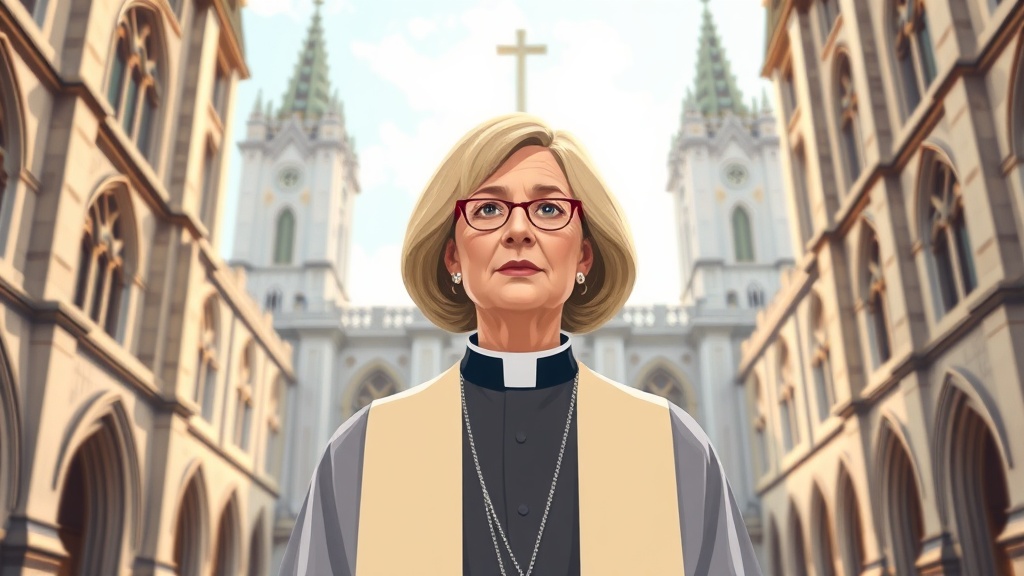
Sarah Mullally’s Historic Rise: What Her Archdiocese Means for Gender Equality

{alt="Sarah Mullally, first female Archbishop of Canterbury, in front of Westminster Abbey, spring light"}
Hook:
"For 1,400 years the Church of England has been led by men. Today, that changes."
Sarah Mullally’s enthronement as the first female Archbishop of Canterbury isn’t just a ceremonial shuffle – it’s a seismic cultural shift that reverberates far beyond the stained‑glass walls of Canterbury Cathedral.
Why does this matter now?
The appointment comes at a moment when the broader conversation about gender parity in leadership is reaching a fever pitch. From corporate boardrooms to tech startups, the demand for inclusive representation is louder than ever. In the religious sphere, however, change has traditionally lagged. Mullally’s rise signals that even centuries‑old institutions can adapt when pressure mounts. Her leadership could become a blueprint for other faith traditions.
What challenges will Sarah Mullally face?
How will she unite a divided Anglican Communion?
The Anglican Communion is a global network of 85 million believers, ranging from progressive congregations in North America to conservative parishes in Africa. Mullally inherits a fractured community still wrestling with issues like same‑sex marriage and the role of women in clergy. Her background as a former nurse‑practitioner‑turned‑bishop gives her a pragmatic, people‑first perspective that could bridge those gaps.
Will her gender become a political flashpoint?
Critics have already framed her appointment as a “political statement” rather than a spiritual one. Historically, female leaders in religious institutions have been subjected to heightened scrutiny over everything from dress to doctrinal decisions. Mullally will need to navigate that double‑standard while staying true to her vision.
Can she drive institutional reforms?
Mullally has hinted at modernising the Church’s governance structures, including more transparent financial reporting and a push for climate‑justice initiatives. If she can turn rhetoric into policy, her tenure could become a blueprint for other faith traditions.
How does this impact freelancers and solo professionals?
What can we learn about breaking glass ceilings?
Mullally’s story mirrors the freelance journey: a non‑linear path, resilience in the face of setbacks, and the need to constantly prove one’s worth. Her ascent underscores a vital lesson – credentials matter, but perseverance and authenticity win the day.
Does this shift affect our own client negotiations?
Just as the Church is now more open to diverse leadership, many forward‑thinking clients are actively seeking inclusive partners. Highlighting your own commitment to diversity can become a differentiator in proposals and pitches.
Quick‑Hit Guide: Leveraging Leadership Milestones for Your Business
- Add the news to your email newsletter – a one‑sentence hook (e.g., “First female Archbishop of Canterbury appointed – what it means for gender equity”) drives open rates.
- Create a social‑media carousel – use the Reuters photo (with credit) and a short caption about the broader trend.
- Offer a free mini‑consult – position yourself as a “diversity‑focused business strategist” for clients seeking inclusive branding.
- Update your LinkedIn headline – add a line like “Advocate for gender‑balanced leadership in tech & business.”
- Track engagement metrics – see how your audience reacts to gender‑equality content and double‑down on the formats that perform best.
Takeaway
Sarah Mullally’s appointment is more than a headline; it’s a case study in how entrenched institutions can pivot when cultural tides shift. For freelancers, the lesson is clear: visibility, authenticity, and a willingness to champion inclusive change can turn a historic moment into a personal advantage.
Related Reading
- International Women’s Day: Women Pioneering Bio‑Harmony Longevity – a roundup of women leading change in health and sustainability.
- The IWD Exposure Trap: Why You Must Invoice for Women’s Day Panels – how to monetize gender‑focused speaking gigs.
- Your Personal Brand Is Your Receipts: What Actually Works in 2026 – building a brand that stands out in a crowded market.
Sources
- Reuters, "Mullally prepares to be enthroned as Church of England's first female leader" (23 Mar 2026) – https://www.reuters.com/world/mullally-prepares-be-enthroned-church-englands-first-female-leader-2026-03-23/
- Reuters, "Mullally enthroned as first female Archbishop of Canterbury" (25 Mar 2026) – https://www.reuters.com/world/mullally-be-installed-first-female-archbishop-canterbury-2026-03-25/
- The New York Times, "Sarah Mullally, the First Female Archbishop of Canterbury, Is Enthroned" (25 Mar 2026) – https://www.nytimes.com/2026/03/25/world/europe/sarah-mullally-archbishop-of-canterbury-church-of-england.html
- Al Jazeera, "Sarah Mullally enthroned as first female archbishop of Canterbury" (26 Mar 2026) – https://www.aljazeera.com/news/2026/3/26/sarah-mullally-enthroned-as-first-female-archbishop-of-canterbury
- NPR, "For the first time in more than 1,400 years, Church of England gets a woman leader" (25 Mar 2026) – https://www.npr.org/2026/03/25/nx-s1-5753707/archbishop-canterbury-church-england-sarah-mullally
<meta.faqs>
[
{
"question": "What is the significance of Sarah Mullally’s appointment?",
"answer": "She becomes the first woman to lead the Church of England, breaking a 1,400‑year male‑only tradition and signaling a shift toward gender parity in religious leadership."
},
{
"question": "How might her leadership affect the Anglican Communion?",
"answer": "Mullally aims to unite the globally diverse Communion by emphasizing inclusive policies, climate‑justice initiatives, and transparent governance."
},
{
"question": "What challenges could she face as the first female Archbishop?",
"answer": "She will likely confront heightened scrutiny, resistance from conservative factions, and the pressure to prove that gender does not dictate capability."
}
]
</meta.faqs>