
The Freelance Cash Flow Survival Guide: How to Stop the Feast-or-Famine Cycle for Good

Look, if your income graph looks like a heart monitor—flat, spike, panic, repeat—you don’t have a "client problem." You have a cash flow system problem.
I know because I lived it. 2017 me would land a $6,000 project, feel like a genius for about 9 days, then spend the next 6 weeks refreshing my bank app like it was going to magically grow. It didn’t. What fixed it wasn’t "more hustle." It was boring systems.
This is the playbook. No fluff. Just the infrastructure that keeps your business alive when things get quiet.
Section 1: Separate Your Money Before It Separates You

Here’s the thing: if all your money sits in one account, you’re flying blind.
You see $8,200 and think, "I’m fine." You’re not. Some of that belongs to taxes. Some of it is next month’s rent. Some of it is already spent—you just haven’t admitted it yet.
You need multiple accounts. Minimum three:
- Operating Account: Where client payments land and bills get paid.
- Tax Account: 25–35% of every payment. Move it immediately. Not later.
- Owner Pay: Your actual salary. The number you can safely spend.
(I learned this after accidentally spending $3,200 of "future tax money" on a new monitor setup. The IRS does not care about your color accuracy.)
This one change alone eliminates half your financial anxiety. Because now the number you see is real.
Section 2: The 50% Deposit Rule (And Why It’s Non-Negotiable)

Let’s be real. If a client won’t pay 50% upfront, they’re not "thinking it over." They’re testing how much risk you’ll absorb for them.
You are not a bank.
Your default terms should be:
- 50% upfront before work starts
- 25% at midpoint (or milestone)
- 25% before final delivery
This does two things:
- Improves immediate cash flow
- Filters out bad clients automatically
In 2017, I skipped the deposit for a "great opportunity." That opportunity turned into a $4,000 unpaid invoice and a very educational December. Don’t do that.
No deposit = no project. Write it into your contract. Enforce it. Sleep better.
Section 3: Build a 90-Day Cash Buffer (Your Anti-Panic Fund)
The feast-or-famine cycle feels like chaos, but it’s predictable. Work dries up. Payments get delayed. Life happens.
Your job is not to eliminate volatility. It’s to survive it.
Target: 90 days of business and personal expenses in cash.
Not invested. Not in crypto. Cash.
Why 90 days?
- It gives you time to replace a lost client
- It lets you say "no" to bad projects
- It removes desperation from your pricing
Start small. First goal: 30 days. Then 60. Then 90.
(The first time I hit a 60-day buffer, I slept through the night for the first time in a year. That’s not motivational. That’s math.)
Section 4: Invoice Like a Professional, Not a Hopeful
If your invoicing system relies on "friendly reminders," you’re going to get burned.
Your invoice terms should be crystal clear:
- Net 14 (not Net 30 unless you enjoy waiting)
- Late fee: 1.5–2% per month
- Work pauses automatically on overdue invoices
And you enforce it.
Not emotionally. Systematically.
Late fee kicks in automatically. Work stops automatically. No awkward emails. The system handles it.
Because here’s the uncomfortable truth: clients prioritize what hurts. If paying late costs them nothing, you’re at the bottom of their list.
Section 5: Smooth Your Income With Retainers

One-off projects are the main cause of income spikes and crashes.
Retainers fix that.
A simple retainer looks like this:
- $1,500/month for ongoing design support
- Defined scope (e.g., 10 hours or specific deliverables)
- Unused time doesn’t roll over (important)
Stack 3–5 retainers, and suddenly your "baseline" income exists.
Now new projects become upside, not survival.
(I resisted retainers for years because I thought they were "restrictive." What’s actually restrictive is not knowing if you can pay rent next month.)
Section 6: Track Cash Flow Weekly (Not Monthly)
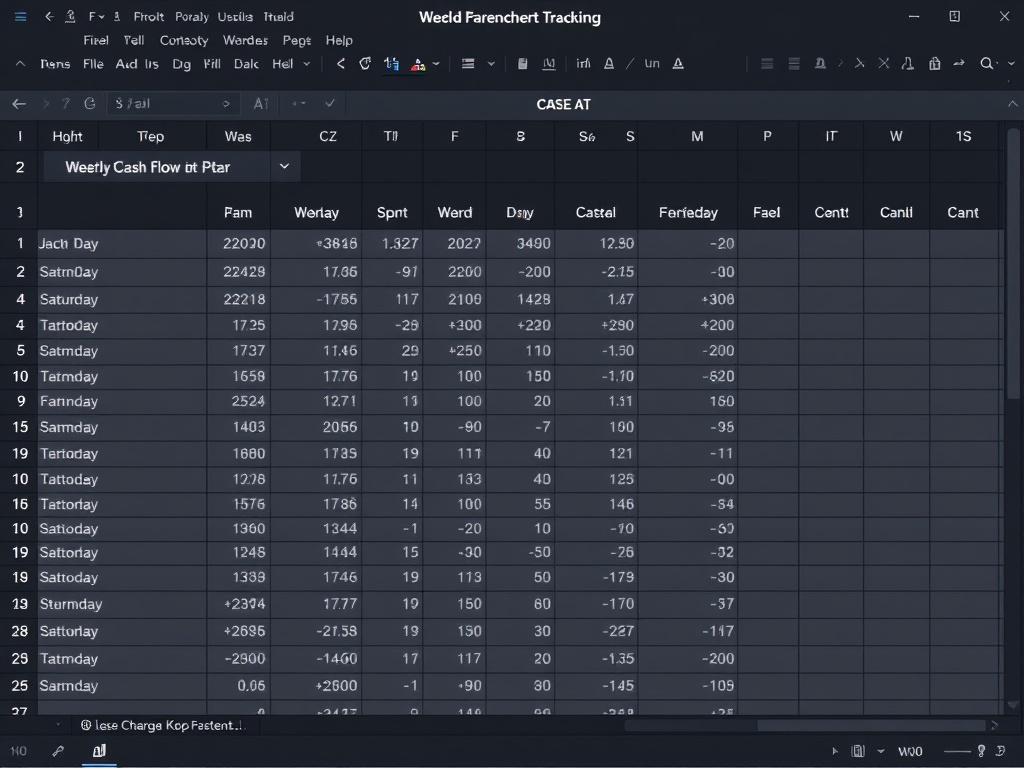
Most freelancers look at their finances once a month. That’s how problems sneak up on you.
You need a weekly check-in. 15 minutes. Same time every week.
- Cash in (payments received)
- Cash out (expenses paid)
- Upcoming invoices
- Upcoming expenses
This is your early warning system.
If you see a gap coming 3 weeks out, you can fix it. If you see it when your account hits $214, you’re already in damage control.
(Friday afternoons. Every week. No exceptions. The math doesn’t lie.)
Section 7: Raise Your Rates or Stay Broke

Let’s address the obvious one.
If your rates don’t cover:
- Taxes
- Health insurance
- Retirement savings
- Downtime between projects
You don’t have a business. You have a liability.
Run the math. If you want $100,000/year take-home, you probably need to bill closer to $160,000–$180,000.
Because expenses exist. Downtime exists. Reality exists.
Raising your rates isn’t about confidence. It’s about survival.
Section 8: Install Friction Where It Protects You
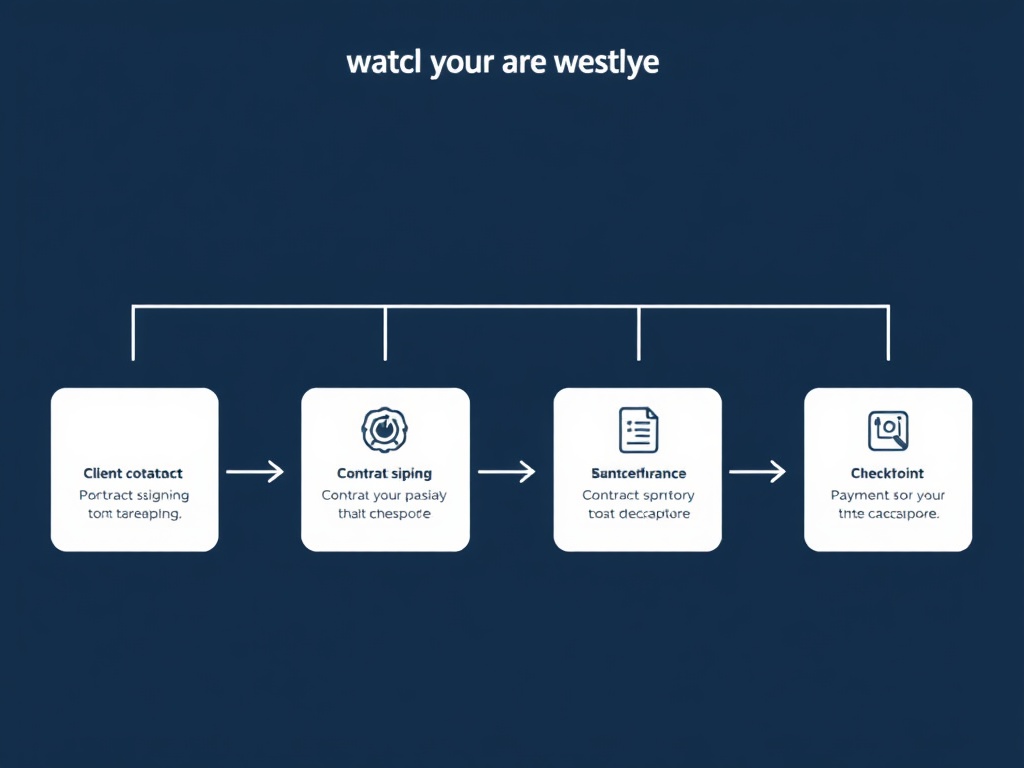
Bad systems are smooth in the wrong places.
If a client can start a project without signing a contract or paying a deposit, your system is broken.
You want friction at the start:
- Signed contract required
- Deposit paid
- Scope clearly defined
And zero friction during execution.
This flips your entire business from reactive to controlled.
Final Reality Check
Cash flow problems don’t get solved with "better clients" or "more visibility." They get solved with systems.
Unsexy, repeatable, boring systems.
You don’t need 100 clients. You need predictable money.
Start with one thing from this guide:
- Open separate accounts
- Add a deposit requirement
- Schedule your weekly cash check
Then layer the rest.
Because the goal isn’t to "feel successful." It’s to stay in business.
Now go fix your cash flow.